Archivo de la etiqueta: English

Through Catamarca’s puna to Antofagasta de la Sierra.

This excursion through the puna to Antofasta de la Sierra (including a stop in the impressive Campo de Piedra Pómez) was, without a doubt, one of the highlights of my last vacations.

The first day of the excursion started early in the morning with a good breakfast in Posada Las Cardas, the excellent hotel where we spent the night in Belen. Sergio was our driver and our guide, and we brought mate, cookies, hat, sunglasses and, of course, our cameras with full batteries. We were ready for a 10 hours trip.
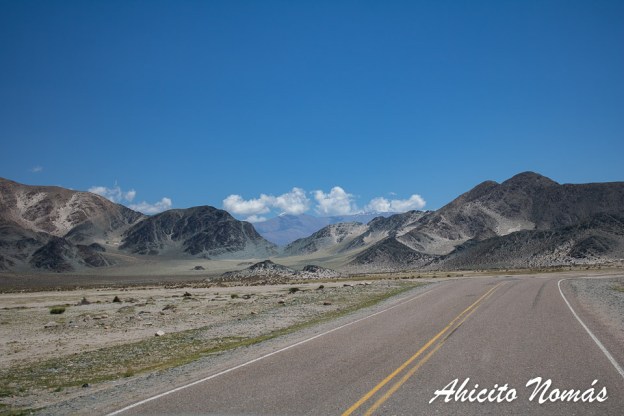
Blue sky and green vegetation at the beginning.

We left the town driving along the famous Route 40 to the North and made a stop in the Belen’s Ravine to take a few photos on the Belen River flowing between the mountains. After a few minutes we took the Provincial Route 36, and later, at Puerta del Corral Quemado, we took the Route 43. At this point, some huge and particular rocks along the street caught our attention. It was a geological formation called «Old Port» as the rocks looked like ships. Using your imagination you can «see» there a lot of moored vessels.

The geological formation called «Old Port».

After a brief stop at a city shop in Villa Vil we continued the journey. Sometimes the road was paved and sometimes it wasn’t, but as we advanced the landscapes were more and more incredible.

The non-paved road usually is traveled by mining trucks.

I have to say, Sergio was an excellent guide. While he was driving he explained to us all the details about what we were seeing. He made us notice how the landspace is constantly changing, and how sometimes we could see a mountain full of vegetation, which then, a few kilometers later and from a different angle, showed a completely bare rock wall. There you can see the marks of the water erosion.

Sergio’s hand on the wheel.

But the biggest change happens when you can see something yellow on the ground. After a few curves there are no more doubts: It’s sand. We are close to the Randolfo’s Slope and there are hugh sand dunes that cover most of the mountain. Due to the action of the wind these dunes are constantly changing position.

The amazing Randolfo’s dunes.

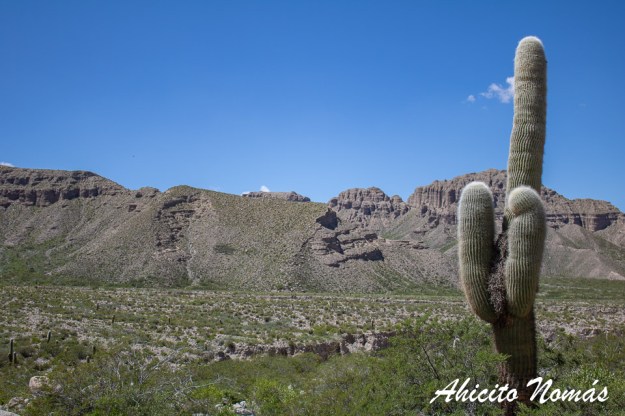
From this point, everything changes. There is less vegetation: no more trees, but just a few bushes. The weather becomes arid, in this area of the country it hardly rains. You can see how the mountains get farther and farther, until you finally see them on the horizon. Wellcome to the Atacama’s Puna, an amazing and beatiful place where there’s almost no vegetation and the ground is made of stone.

Some landscapes from the Catamarca’s pune.

There isn’t much life here, really. But sometimes you can see groups of vicunas which usually are near wetlands, as they need some water to live. While driving you have to be very carefull with the vicunas. They can suddenly cross the road and cause an accident.

Be carefull with the vicunas! They may cause and accident…

In the distance, everywhere, you can see now volcanoes. You can identify them by their dark colors. Around them you can see also little hills: they are secondary volcano’s mouths, which are sometimes more dangerous than the main one. Anyway, Sergio reassures us: The last eruption took place here 12 million years ago so, don’t worry. We can relax and enjoy.

Deviation to the Pumice Field.

We had lunch in El Peñon, a small town in the middle of the puna. There we enjoyed some regional food before continuing the journey. A few meters away some unbelievable colors made us stop. This is the view you can enjoy from there.

Amazing colores near the town El Peñon.

Now we could see lots of volcanic rocks, everywhere. Closer and closer. Two classes can be distinguished: solid stones on the left of the road, and much more porous on the right. Both of them, black stones. Some of them forming true black stone walls.

Vulcanos on the horizon, everywhere.

Once we leave behind those black rocks behind, it’s like magic. The landscape changes completely, again. Now we can see a colourful puna, with greens and yellows around the beatiful Antofagasta Lagoon.

Black volcanic rocks on both sides of the road.

It was late afternoon when we finally arrived to Antofagasta de la Sierra, a quiet and small town in the puna where we would spend the night. It was a very long day. We were tired, but happy. It was really worth it.

The Catamarca’s puna is not famous. Not even in Argentina. But it’s amazing, one of the most beatiful places in the country, I can say now. I really recommend it. And if you want to do this excursion, one of the alternatives is the Chaku Aventuras agency. You can contact them and check the available options. Just choose the one you like the most.
Niagara on the Lake, Canada: 7 Things to do.

Niagara on the Lake is a small canadian town which could be the scene of a film. It is located in the Southeast of the country, on the shores of the Lake Ontario, right on the border with the United States.

Today it’s a very quiet place, but in the past it was a top important location due to the geographical situation. In fact, this town was the Canadian capital (called Newark at that time) until the year 1797, when the capital was moved to York only because Newark was so close to the US border. In 1798 the town was renamed Niagara, and since some years later it is known by its current name: Niagara on the Lake.

In the past this town was a strategic control point, as Niagara River was an important access route to the United States. Sailing accross the lake, merchant ships could reach the Atlantic Ocean. Located at the mouth of the river, Niagara on the Lake was an excellent place to have full control over such commercial traffic.

It is not suprising at all then, that this has been the epicenter of the war between the United States and Canada. You can still feel this atmosphere of war, as there are still forts at both sides of the river today. But this is the only thing you will see belonging to the pre-war times, because the town was invaded by the Americans and almost completely destroyed. It had to be raised again from scratch.

Today Niagara on the Lake has many tourist attractions and is a «must stop» when driving to the Niagara Falls (there will be a post about the falls soon). Here are 7 suggestions of things to do there.

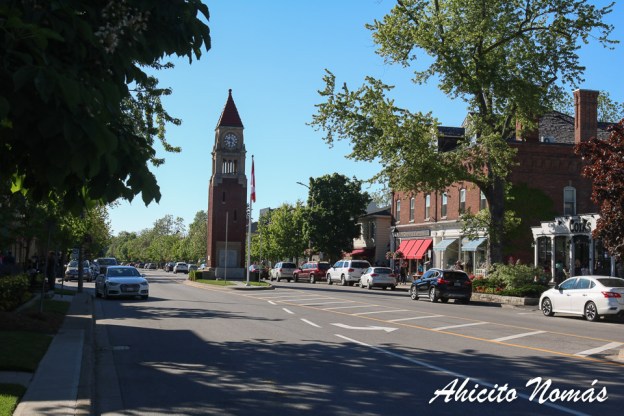
Walk through the historic town.

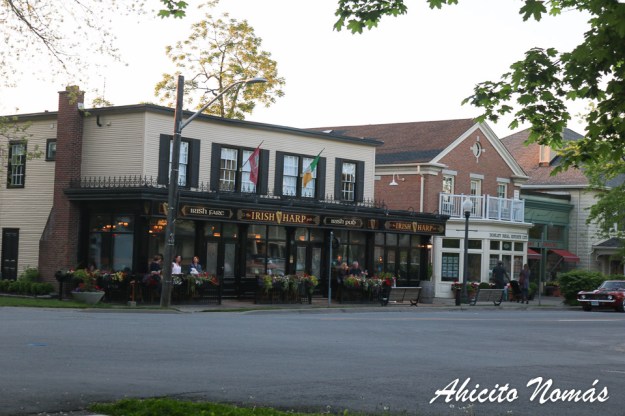
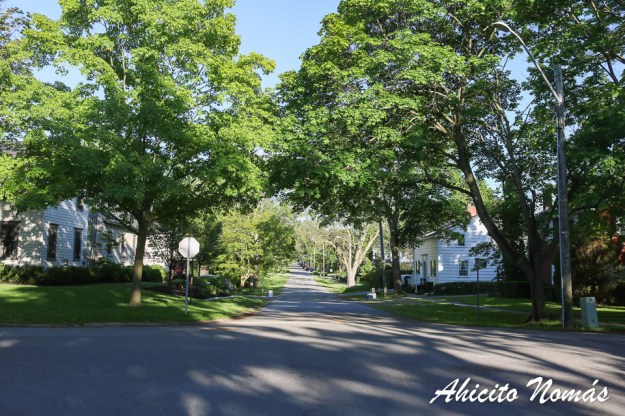
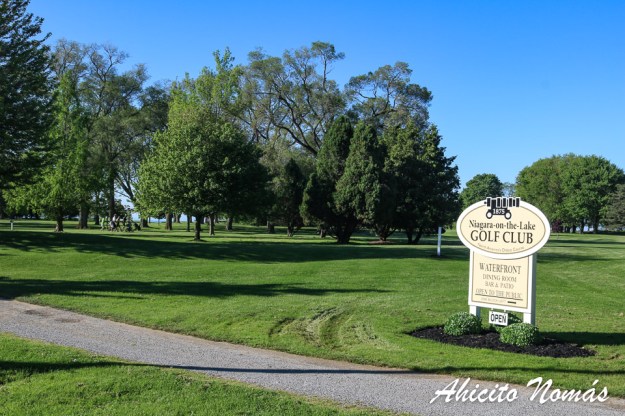
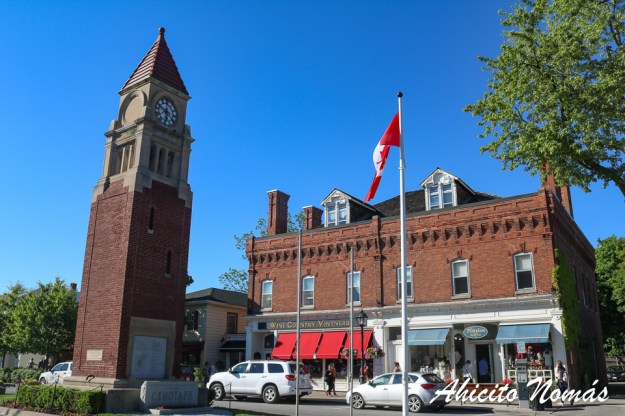
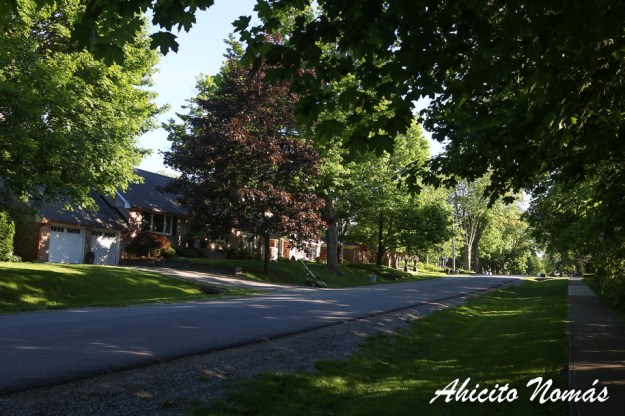
I think that there’s only 1 way to get to know a town or city well: walking through it. And Niagara on the Lake is an excellent place to do so. Quiet streets, a lot of green, the architecture of houses and churches, the golf course and, of course, the beatiful Lake Ontario. Everything makes a hike here a relaxing and enjoyable experience.

Running and History at Butler’s Barracks

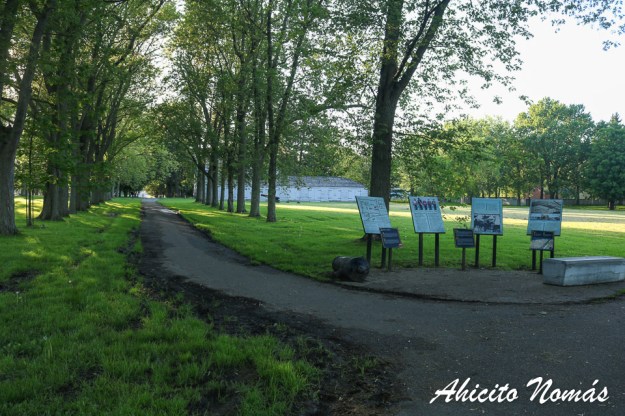
Butler’s Barracks is an historic site, which served as a military camp for many years. Today it’s a large park with trails where you can walk or run enjoying the day. There are still constructions that belonged to military installations during different times and signs that recall events that happened in this place.

Fort George.

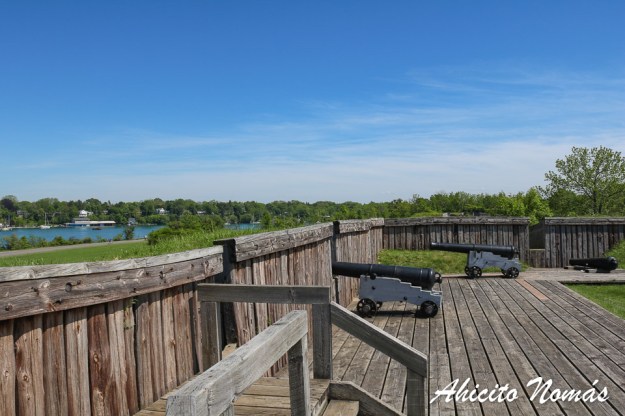
For sure, the main attraction in the town. Historically, the fort is probably the most important place as it was the main scene of the 1812 War. Culturally, today it’s a great museum where you can better understand what happened during this war, and how was the military life in the Century XIX. Of course, Fort George will have its own post later on the blog.

Niagara on the Lake Museum

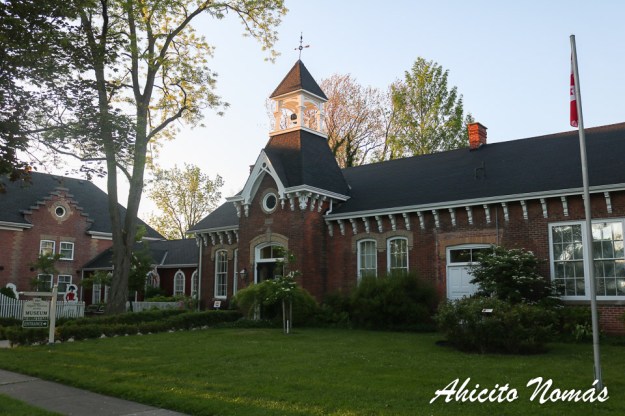
Looking for historic documents and elements preservation, the town has it’s own museum. In fact, here is one of the most important historic colections from Ontario, incluiding a display regarding the First World War. For more information you can visit the museum’s official web page.

Visit Niagara Falls.

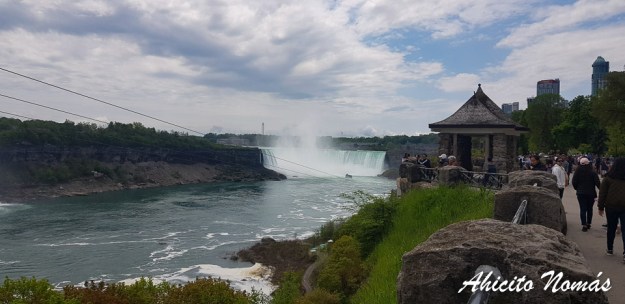
The famous Niagara Falls are located less than 25 km away from the town, and without a doubt, they are «a must see». There are many activities to be done here, such as boarding and navigating the river to get closer to the waterfall, which is what I did and I will tell you about it on the blog soon. Or you can even walk behind the waterfalls and see the city from the other side! Of course, you have to pay to do that. But if you don’t want to spend money, you can simply admire its natural beauty from the street.

Taste Icewine in a Winery

This area of Canada is conducive for the wine production and that’s the reason why so many wineries are located around the town. This includes everything from classic wines to whisky. And of course, something that can only be found here and in Germany: Icewine, a canadian specialty.

Icewine is a particular type of sweet wine that is obtained from grapes that are harvested and pressed while frozen, during the first frosts of winter. In this way, the grape concentrates a greater amount of sugar and gives the wines a very particular flavor. Despite the fact that the icewine originates from Germany, currently Canada is the world’s leading producer, and therefore to taste Icewine during your visit to Niagara on the Lake seems to be a very good idea.

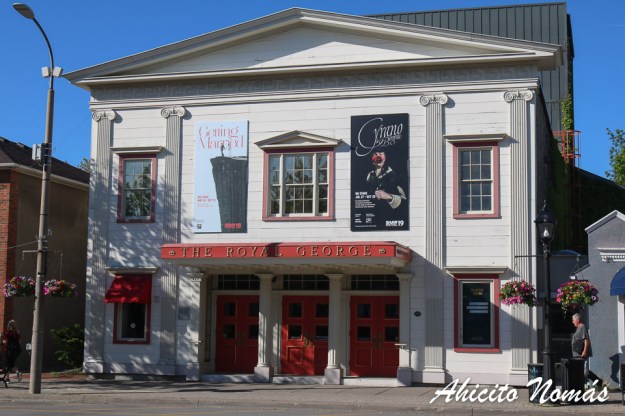
Go to the Theater: The Shaw Festival

The theather has great relevance within the cultural offer of Niagara on the Lake. The Shaw Festival has been held since 1962 and today has great prestige due to the works it stages. You can check the latest news in the Shaw Festival web site.

How long to stay at Niagara on the Lake? Well, if you only want to know the town, walk around and visit Fort George (don’t miss it, please), with a weekend should be enough. You may also consider at least a half day to visit Niagara Falls as well. The important thing is to carefully plan what you want to do, in order to decide the correct lenght of your stay. Hopefully, this post will help you better understand what interesting options you have, and make the right choice.