Archivo de la etiqueta: English

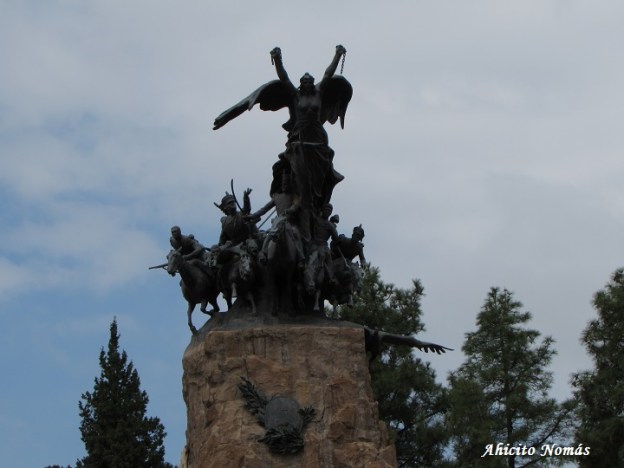
Cerro de la Gloria, in San Martin Park of Mendoza City.

San Martin Park is a huge green space in the west of Mendoza, and it’s one of the must-see when you visit the city. You can go with an excursion, by public transport or even walking.
Portones parque
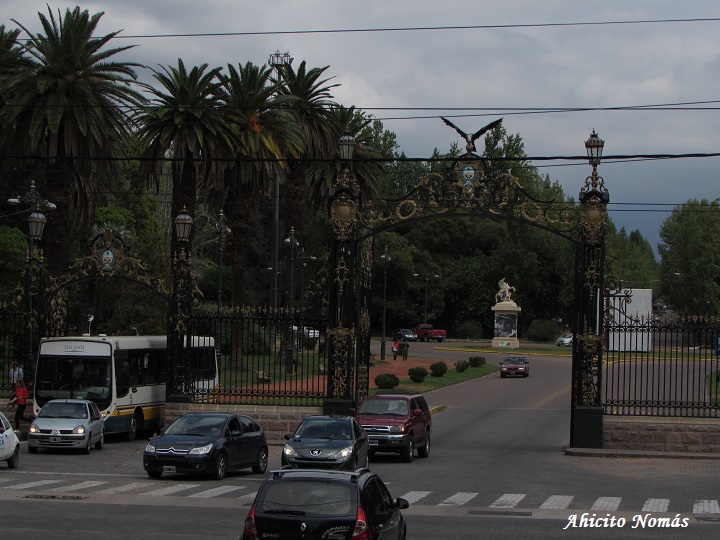
The iron gates at the entrance.

You will easily notice the entrance of the park due to the gigantic iron gates. They are there since year 1907, when they were transported from Glasgow, Scotland. Once in Mendoza, the shields of the province and the condor were added to this work of art.
Caballo parque
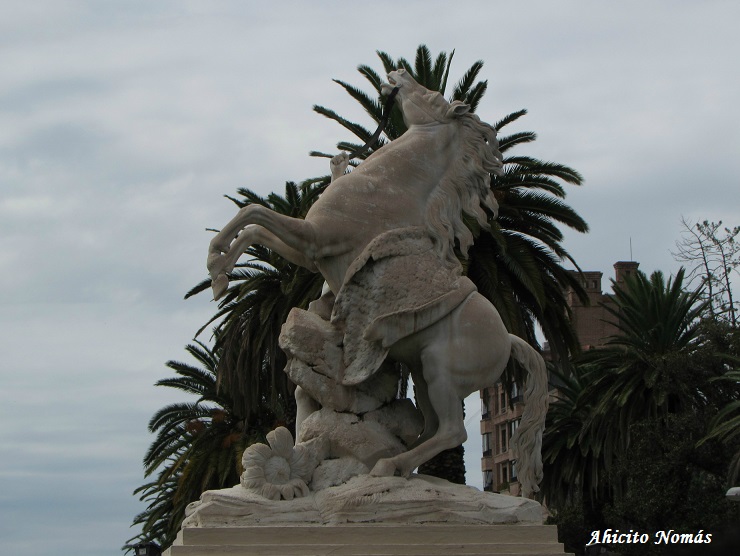
The Marly’s Horses.

Inside the park you will see Marly’s Horses, a replica of the work of art that was requested by Louis XV to decorate the gardens of the Palais of Marly and now is on display at the Louvre in Paris. The replica was made in Carrara marble commissioned by the provincial government in 1911.

Fuente
The Fountain of the Continents

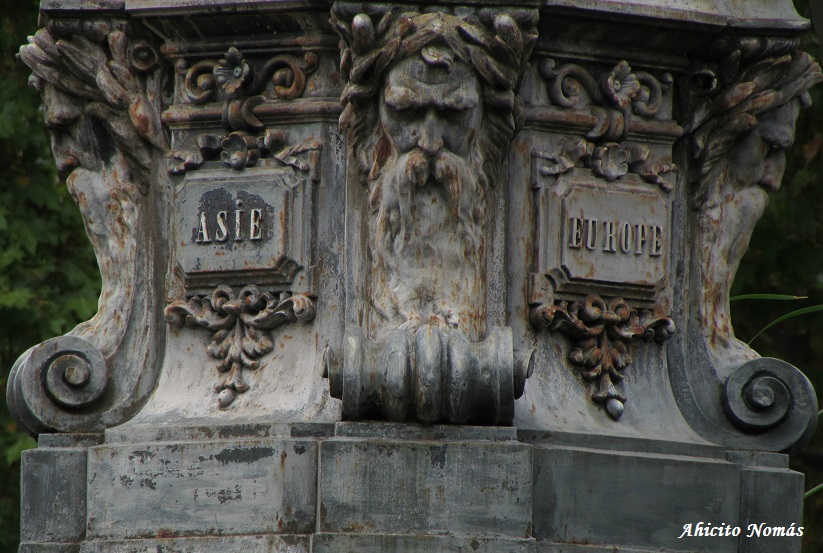
Another iconic monument in the park is the Fountain of the Continents, which was brought from France and in which 4 children (2 boys and 2 girls) hold the third pool standing on a square base. Each side of the base is inscribed with the name of a continent: America, Asia, Europe and Africa. This is something that draws our attention today because we all know that the continents are 5, not 4. But in 1910 when the fountain was built, Oceania was not considered a continent.
Fuente primer plano
In the Fountain the contintents are only four.

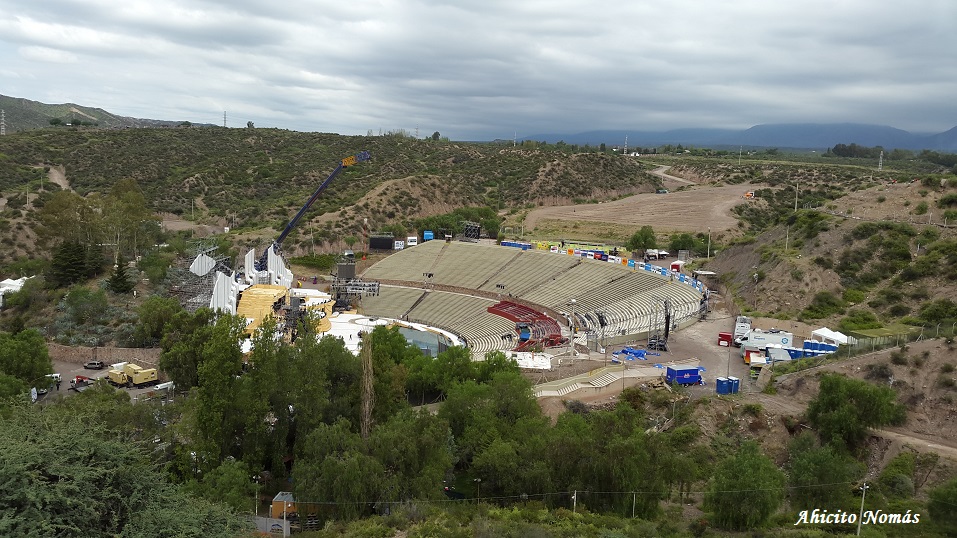
In addition to the monuments, in the park there are other things to see, such as the city’s zoo, an equestrian club, the lake located behind the Fountain of the Continents, the Malvinas Argentinas football stadium where World Cup matches were played in 1978, and of course the Frank Romero Day Greek Theater, scene of the Fiesta de la Vendimia, the most important celebration in Mendoza.
Anfiteatro
The Fiesta de la Vendimia takes place each year in the Greek Theater.

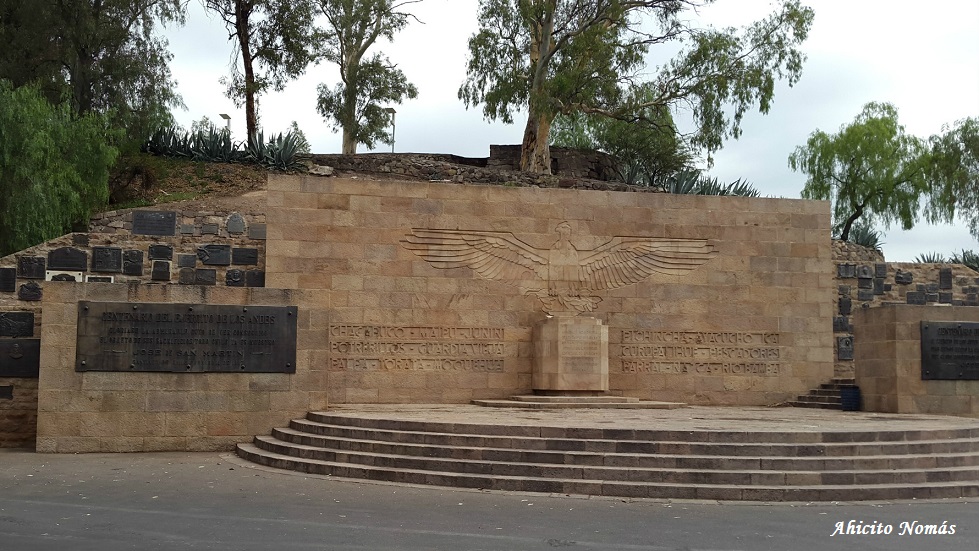
But the most important symbol of the park is once again an art of work. Located since 1912 on the Cerro de la Gloria (formerly, Cerro del Pilar), the Monument to the Andes Army is a truly colossal art of work. It is accessed by climbing a staircase that leads to the top of the hill.
Ingreso al Monumento II
The staircase to access to the Cerro de la Gloria.

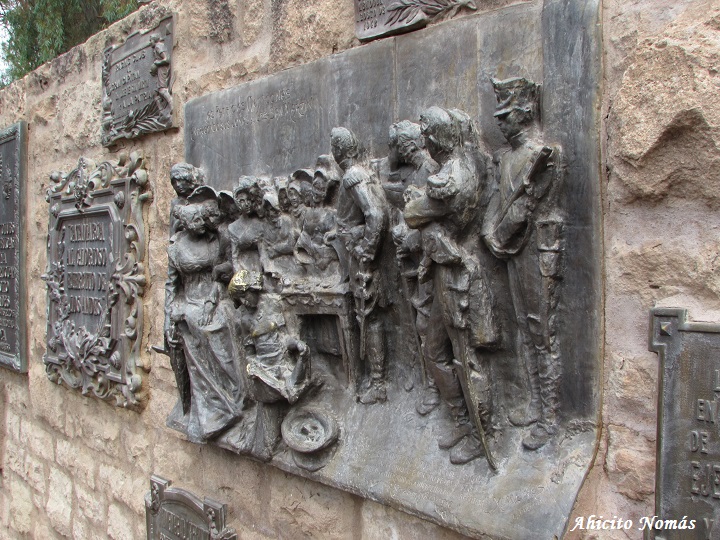
Commemorative plaques decorate the route while one ascends. Some are awesome.
Placas Cerro de la Gloria
There are plaques on the walls that are truly works of art.

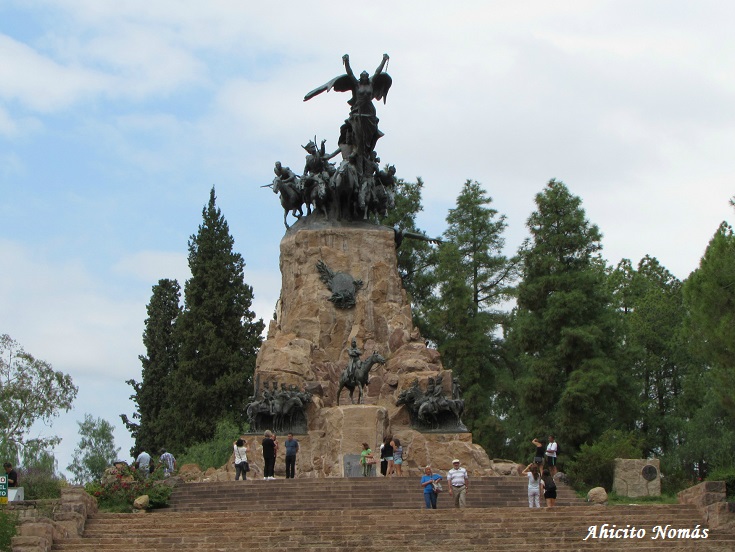
Finally, when you finish climbing the stairs, you can see the esplanade and the imposing monument in the distance, the work of the Uruguayan sculptor Juan Manuel Ferrari.
Monumento
The Monument to the Andes Army.

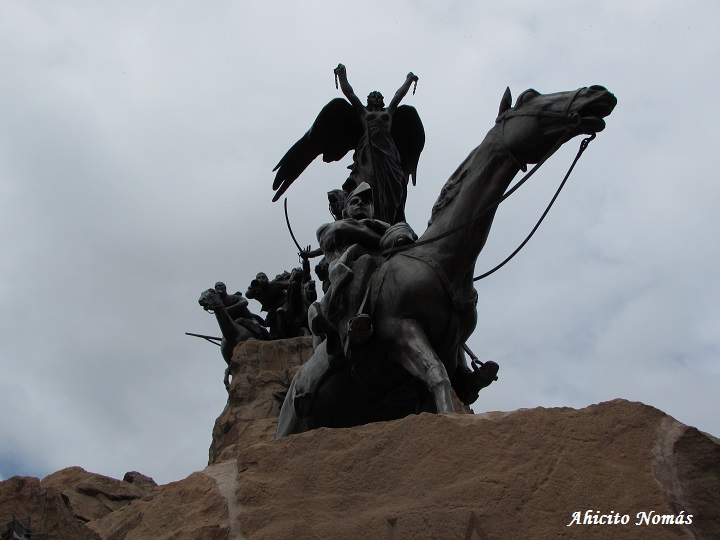
On the front of the monument you can see the statue of General San Martin, known in Argentina as «The father of the country» for having led the war of independence in Argentina, Chile and Peru. You can alse see there the coat of arms of the Argentina Republic. San Martin is flanked by his Granaderos (name with which he baptized his army), and above all of them the Winged Liberty stands out with the broken chains in his hand.
Monumento desde abajo
San Martin and his army crossed the Andes to liberate Chile, and then Peru.

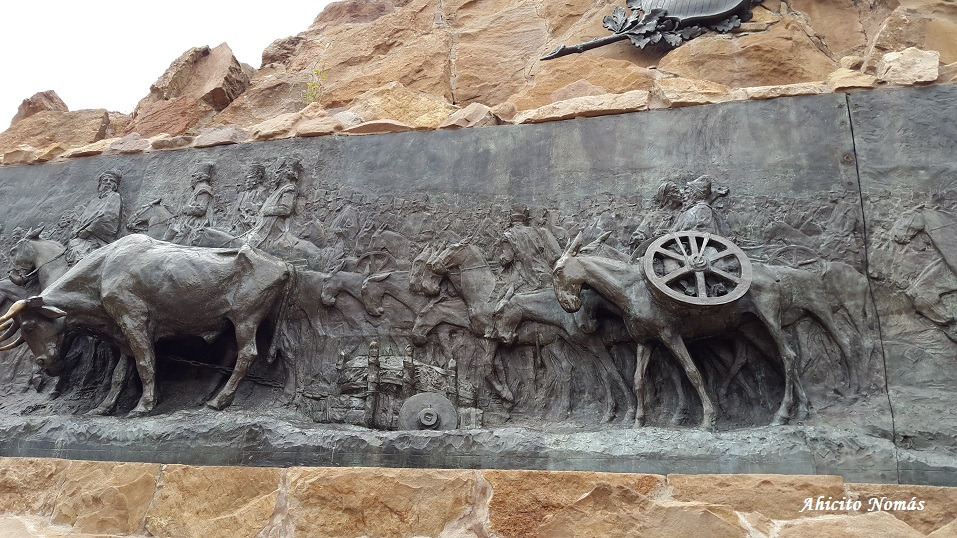
On the east side of the monument you can see the shield of Peru. The preparation of the Andes Army for the battle is represented there. The shield of Chile is on the west side, and you can see the departure of the troops there, in January 1816. On the south side the sacrifice of the ladies of Mendoza is immortalized. They gave their jewels in collaboration with the financing of the military campaing.
Monumento de costado
The Andes Army leaves Mendoza to cross the mountains and fight in Chile.

The Cerro de la Gloria and it’s monument remembering the greatest historical deed of the country are a symbol of the Mendoza City that you should visit. No doubt about that!
Berlin Free Walking Tour

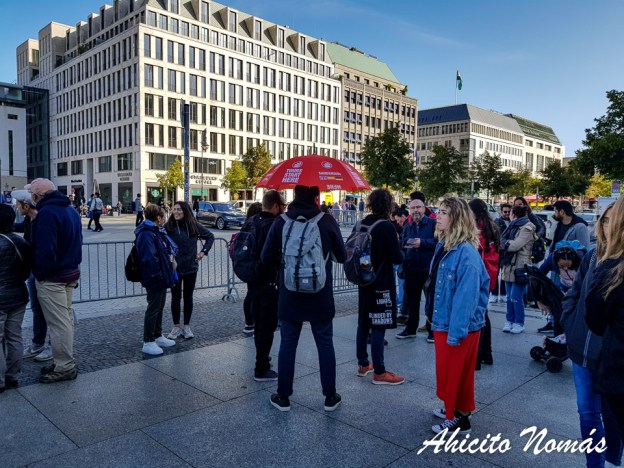
When you visit a city for the first time the best way to get to know it, is to walk it. But if you do it alone, you could miss details about the culture, life style, and historical facts that have happened there. Therefore, in my opinion, a free walking tour is an excellent option: you will walk, you will get some interesting data about the most important places of the city, and you will pay just a tip according to what you think of the tour.

In Berlin there are many options and we finally choose the free walking tour offered by Sandeman. But Berlin is big city, with a long and very important history, so it is plenty of alternatives and each one is different to the other, so you should check first and select the one which better fits your interests.

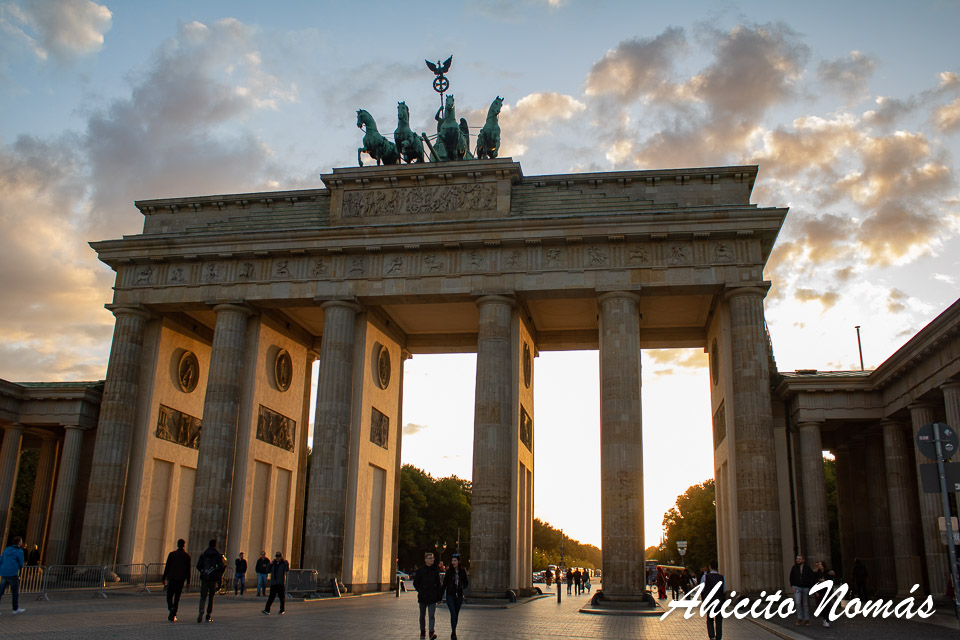
The Branderburger Tor is the symbol of the city.

The meeting point for Sandeman’s tours is the famous Brandenburg Gate, maybe the most iconic and known symbol of the city. It is located at the end of the Unter den Linden Avenue, just in front of the Tiergarten.

The gate was scene of the most important historical facts that happened in the country, and in the entire world. It witnessed the French invasion led by Napoleon, who wanted to take the entire gate to Paris. As he couldn’t, he finally took the quadriga only, which later was recovered by the Germans . In front of the gate the Nazi armies also paraded, and during the Cold War, it became the border between both Germanies, and part of the dark Berlin Wall.

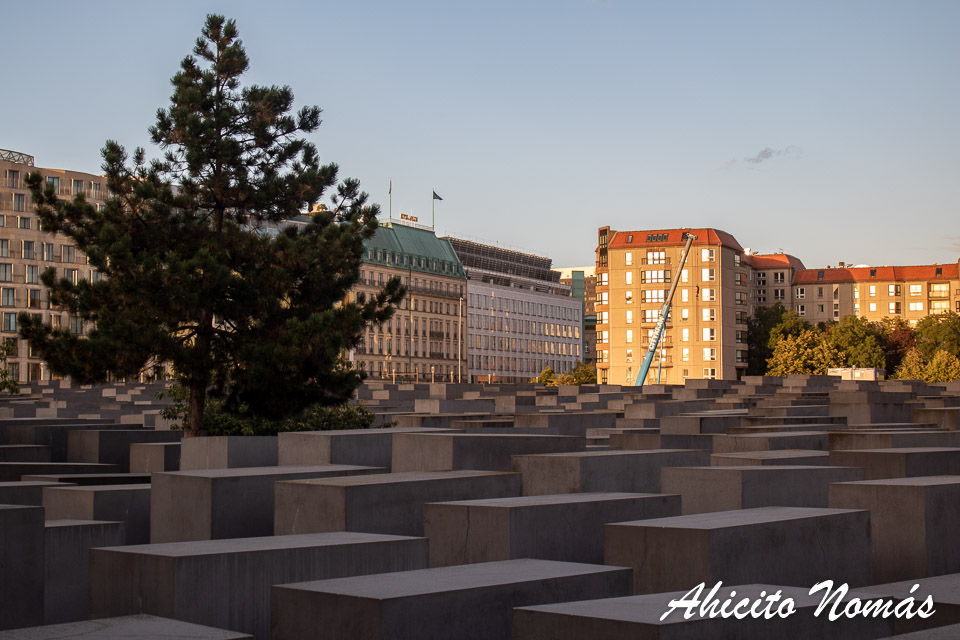
Hundreds of stone blocks form the Memorial to the Jews Murdered in Europe

Just a few blocks away from the gate, the Memorial to the Jews Murdered in Europe is the most solemn point of the tour. We will speak about this memorial later in the blog. All I will say now, is that this is a must-see in the city. Not far way, you will also find the placer where the Führer bunker was located. Now it is just a parking lot, so if you are not accompanied by a guide, you will simply miss it. There’s an important decistion behind it: the government does not want it to become a pilgrimage site for neo-nazis.

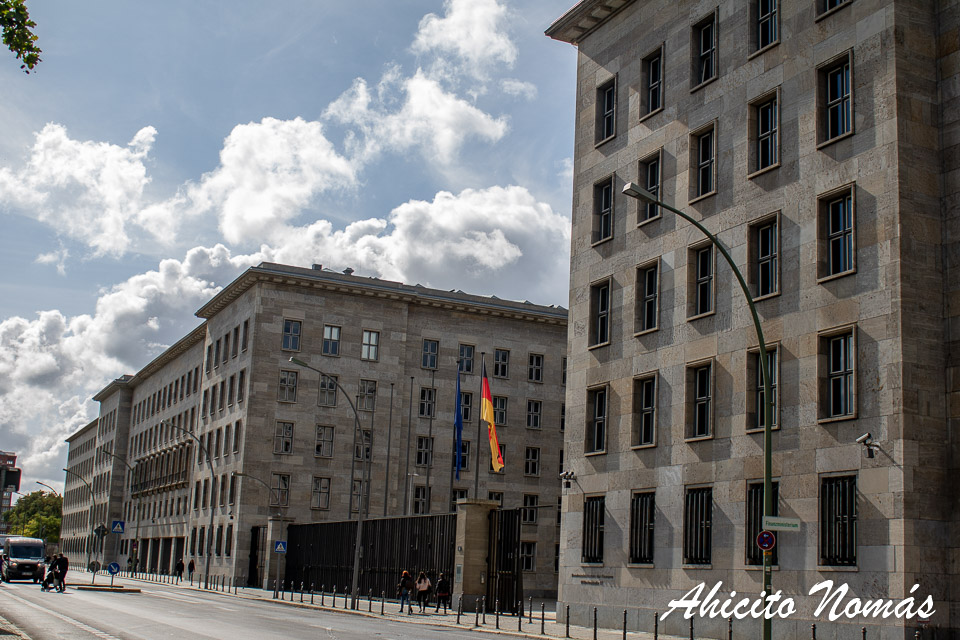
The Ministry of Finance is one of the few buildings where you can see the Nazi arquitecture.

One of the peculiarities of Berlin is that, despite having been the center of Nazi power (or rather because of), there is very little construction that refers to National Socialist architecture. The reason: after the World War II the city was completely in ruins, and only a couple of buildings were left standing. The Ministry of Finance is one of them.

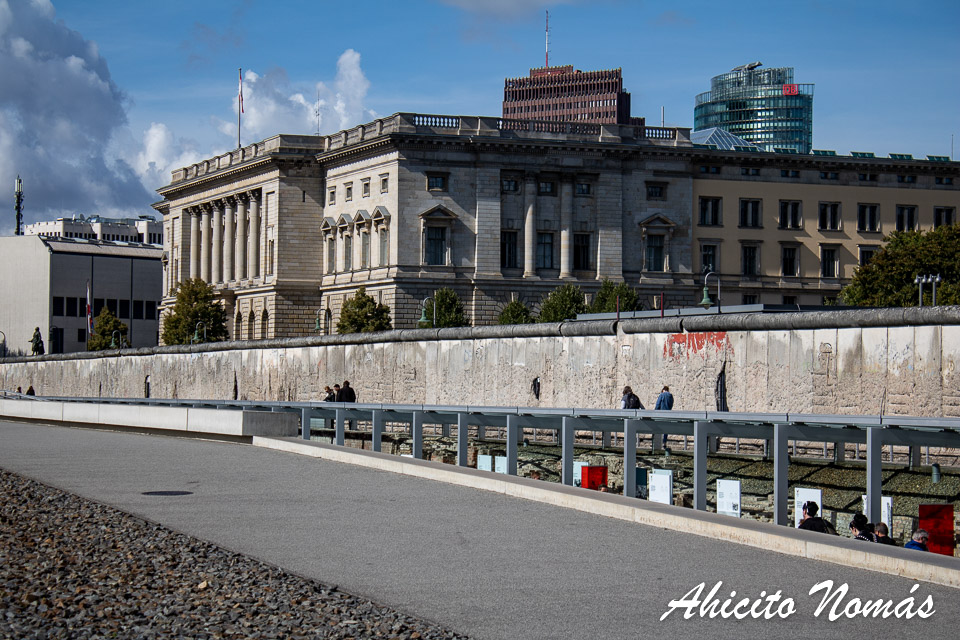
En las ruinas del cuartel general de la Gestapo, Pablo nos cuenta la historia del protagonista de la célebre canción que habla sobre la libertad. No voy a decirte cuál es, porque perdería el efecto, pero lo que sí te digo es que si no lo sabías o no te habías percatado antes, escuchar la letra frente a los restos del temible Muro es impactante.

Next to the Wall, the old Gestapo's Headquarter.

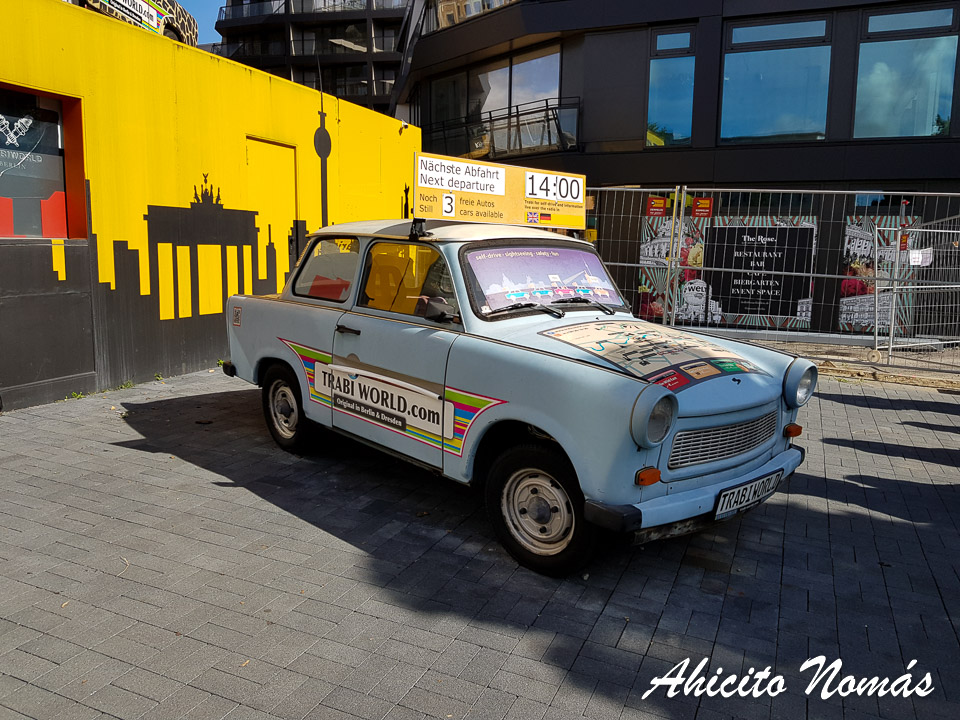
Other historically important places to visit in Berlin are the Checkpoint Charlie (border crossing during the Cold War) and the old Gestapo headquarters with the display called «Topography of Terror». You can also visit Trabi World if you want to know more about this nice communist car which was delivered to the people by the East Germany government after long years on a waiting list.

The communist car

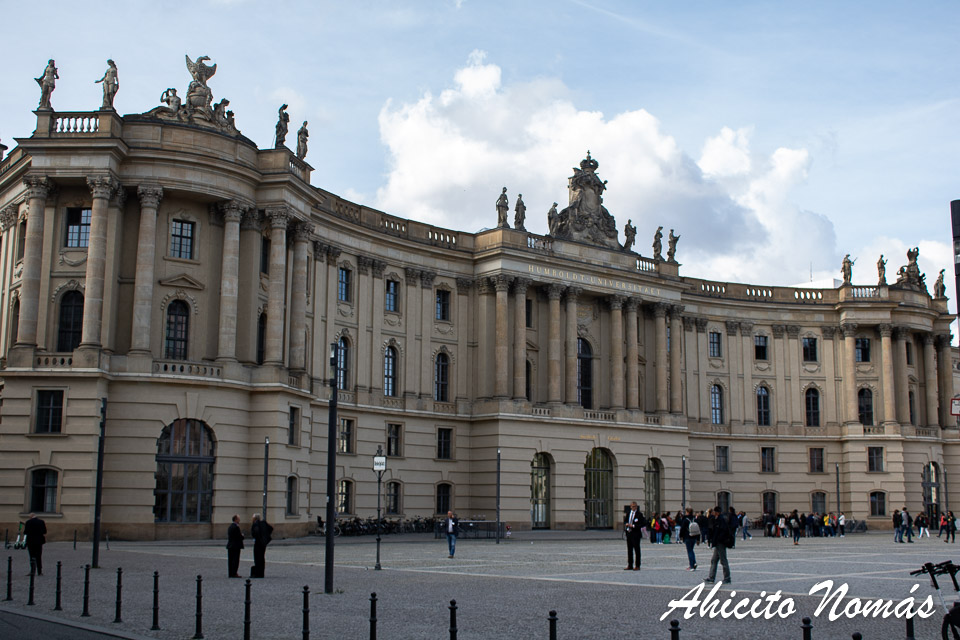
The last point of our free walking tour in Berlin was the Humbold University, an important historical site, again. On the square in front of this building, on May 10, 1933, the famous Bebelplatz book burning took place. Thousands of books were burned by students sympathetic to Nazism.

The Humbold University, where the book burning took place in 1933.

From here on, each one is released to continue touring the city on their onw. But now, with a better idea of what happened in each place, so you can also better choose what to do during the rest of your stay. Whatever you do, just make sure you enjoy this fabulous city that is Berlin.